
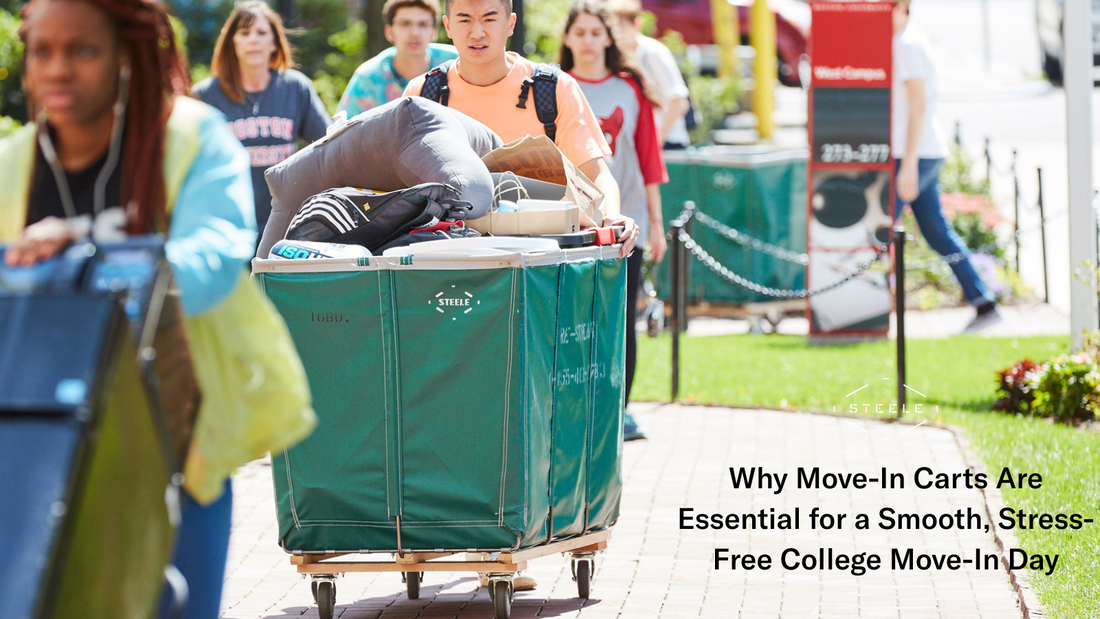
For residence life teams and university administrators, move-in day is one of the most high-stakes events of the academic calendar. It sets the tone for new students and families, tests the limits of your operational planning, and often defines first impressions of your housing program.
One often-overlooked but incredibly effective way to reduce chaos, improve traffic flow, and elevate the student experience? Move-in carts.

Move-In Day: A Logistics Challenge with High Emotional Stakes
Every August, residence life teams face the same challenges:
- Hundreds (or thousands) of students arriving with bulky, disorganized loads
- Congested elevators, stairwells, and limited curbside unloading zones
- Families under pressure to move quickly, often leading to stress or frustration
- Students beginning a major life transition—already overwhelmed by the experience
When these elements converge, the risk of negative feedback increases, and staff are left scrambling to manage logistics instead of welcoming new residents meaningfully.
How Move-In Carts Solve Operational and Emotional Pain Points
Move-in carts aren’t just a convenience; they’re a strategic tool that transforms the entire move-in operation. Here's why every university should have a fleet of them ready to go:
1. Streamlined Traffic Flow
Carts enable students to move their belongings in 1–2 trips instead of 5 or more. That means cars are in unloading zones for less time, reducing backups and allowing more families to move efficiently through high-demand areas.
2. Elevator and Stairwell Efficiency
Durable, maneuverable carts fit into tight elevators and narrow hallways, making it easier for families to navigate vertical buildings without bottlenecks. This helps keep people moving and minimizes damage to walls or fixtures.
3. Reduced Strain on Staff and Volunteers
Without carts, staff and orientation volunteers often jump in to help carry loads, slowing down their ability to focus on safety, information sharing, or community-building. Carts allow helpers to guide and welcome, rather than lift and haul.
4. Positive First Impressions
For families, seeing a well-organized move-in process—with helpful staff and readily available carts—signals that your institution is thoughtful, prepared, and student-centered. These moments influence long-term perceptions of the university.
5. Improved Safety
With fewer awkward loads and reduced physical strain, the chances of injury—whether from lifting, slipping, or tripping—drop significantly for both families and staff.

Implementation Tips for Administrators
If your campus doesn’t yet offer carts—or could improve the current system—consider the following steps:
- Assess demand and volume: Larger campuses may need dozens or even hundreds of carts per hall, especially during peak hours.
- Choose the right carts: Look for sturdy, high-capacity models with smooth casters and protective linings to avoid damaging furniture and interiors.
- Create a check-out/check-in system: Manage usage efficiently and reduce losses with a simple system, numbered carts or clear document pockets.
- Train volunteers and staff: Ensure they know where carts are stored, how to assist families, and how to troubleshoot if elevators or pathways become congested.
- Communicate availability: Let students and families know in advance that carts will be available, and offer guidance on where and how to access them.

The ROI of Move-In Carts
Investing in a fleet of move-in carts may seem minor in the context of broader residence hall operations, but the return is substantial:
- Shorter unloading times
- Happier families
- Reduced facility wear and tear
- Better staff efficiency
- Stronger first-day impressions
For many universities, move-in day is more than just logistics—it’s a defining moment. Move-in carts help make that moment smooth, welcoming, and memorable for all the right reasons.